
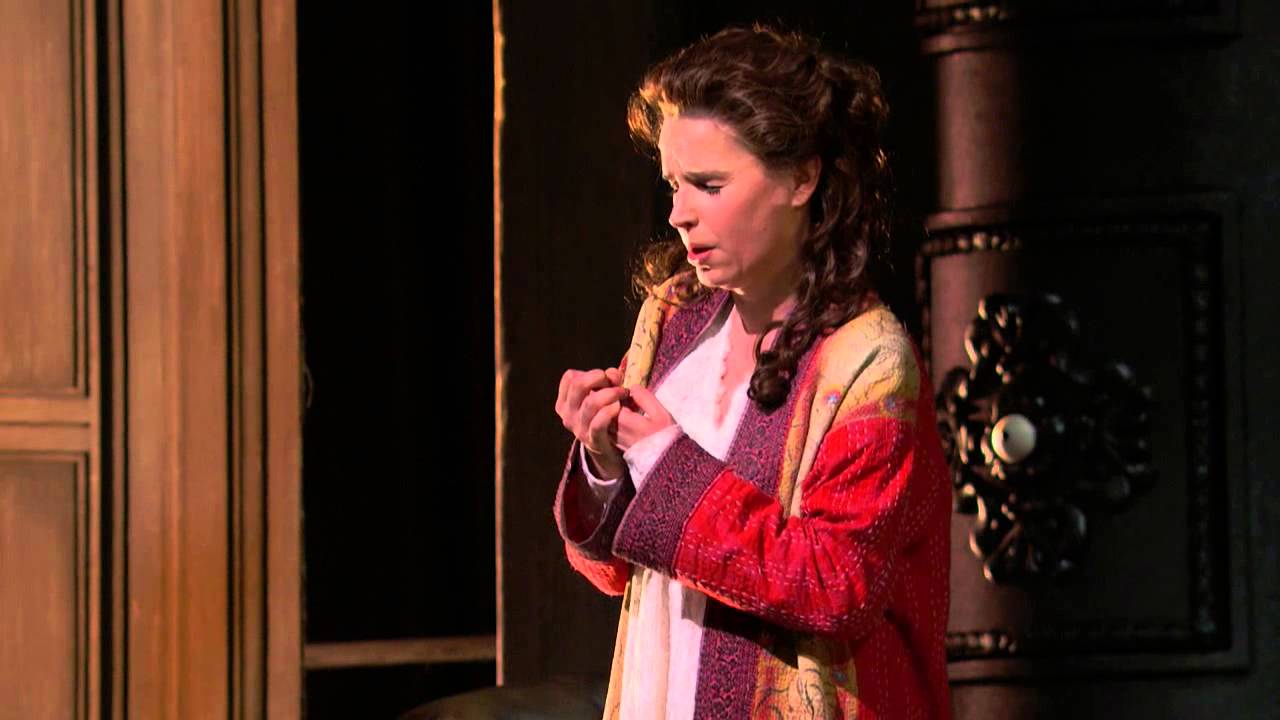
Image retrieved from Metropolitan Opera: https://www.youtube.com/watch?v=BHOzgG-3eTg
THE EFFECTS OF THE LYRIC MEZZO
The timbre heard is depressing and distressing. It allows for the text to be better understood since the listener hears the sadness and emotion within the lyric mezzo’s voice. It’s like you can hear her heart breaking. When you read the translation your thoughts are confirmed. You find out that the lyric mezzo is singing about constant pain which leads to her fragility and breaking heart. When listening to the aria, the emotion I immediately feel is sadness and a kind of call for help. I picture a gloomy late afternoon sky just before it’s about to rain with cold, destructive winds. All dark blue and black colors, along with bits of grey. The voice of the lyric mezzo remains deep and slow with a lot of passion and emotion.
When listening to the aria I found myself admiring how deep the lyric mezzo could go and how you could hear the confidence within how she felt. She held out the notes and took her time expressing what she felt within each and every word that she sung.
There are many strong, independent and brave female artists which express their emotions and thoughts, whether good or bad, within their songs. These women preform their music with passion and allow you to relate to their struggles. They take their hardships and turn them into something that motivates them. They also impact others and inform individuals that they are stronger than they believe they are. When thinking about a lyric mezzo artist of contemporary music, I thought of Adele and her song “Set Fire to the Rain” (https://www.youtube.com/watch?v=uj3nFNIV2jY). The aria and Adele’s song both express a tone of sadness and difficulty. Both women are strong, influential and independent; at least I believe that Charlotte will be as I learn more about the opera. Both women have a deep voice and hold their notes when they sing. However, I believe that Adele’s song ends on a more optimistic note while the aria ends on more of a defeated note. Also, the profession of the women were most likely different. Most classical lyric mezzos were portrayed as nurses, witches or wise women and not artists.
 Greetings to Karolina's Blog
I like your focus on the depth of the voice in your second paragraph.
LikeLike
I liked your post!
LikeLike